New Book: The Art of Street Photography
Review: The Art of Street Photography — Joshua K. Jackson & Sean Tucker (2026)
From my first reading of The Art of Street Photography, I felt a quiet honesty threading through the book. It offers less instruction and more orientation — a subtle shift from collecting images to cultivating a practice rooted in attention, patience, and personal meaning. Jackson and Tucker, both thoughtful voices in contemporary street photography, have created a book that asks not how you shoot, but why you choose to walk the street with a camera in the first place.
This is the gap they set out to fill. As one early reviewer notes, much of today’s street‑photography content “tells you how to shoot. Very little asks you why, or what you're actually trying to say.”
What emerges is a thoughtful, contemporary guide that challenges the genre’s traditional chase for the decisive moment and instead encourages photographers to slow down, to choose their own ethical lines, and to treat the street as a canvas for personal expression rather than a stage for trophies.
A Framework Built Around Seven Ways of Seeing
As I spent time with the book, what stood out to me was how deliberately Jackson and Tucker have organised their thinking. Rather than a linear narrative, they offer a framework built around seven essential aspects of the craft — Mindset, Camera, Presentation, Composition, Approach, Themes, and Perspective.
Taken together, these chapters form a kind of quiet architecture. They move from the inner to the outer, from the psychological to the practical, from the mechanics of the camera to the deeper questions of meaning. It’s a progression that mirrors the way many of us grow in our practice: beginning with the mindset that shapes how we enter the street, grounding ourselves in the tools we carry, learning how to compose with intention, refining how we move, exploring the themes that draw us in, and finally developing a perspective that feels unmistakably our own.
What I appreciate is that the structure never feels prescriptive. It feels invitational — a way of opening the craft rather than narrowing it. Each chapter encourages you to consider not just what you photograph, but how you think, how you move, how you respond, and ultimately how you make meaning out of the ordinary rhythms of public life.
In this way, the book’s organisation reinforces its central message: street photography is not a hunt, but a way of moving through the world with attention, curiosity, and purpose.
A Shift Away from Chasing the Shot
One of the book’s central arguments is a direct challenge to the genre’s documentary DNA. Jackson and Tucker aren’t dismissing the lineage of Cartier‑Bresson, but they are widening the frame. They want photographers to stop hunting for “the shot” and start cultivating a way of seeing that is rooted in intention, ethics, and personal voice.
As Yahoo’s review puts it, the book “asks each photographer to find their own ethical lines, and to take that process as seriously as any creative decision.”
This is a refreshing stance in a time when street photography is often reduced to quick hits on social media — a culture of speed that can erode the deeper, slower work of developing a visual philosophy.
Hunters, Fishers, and the Art of Slowing Down
One of the most memorable ideas in the book is the distinction between hunters and fishers. Jackson describes himself as a hunter — always moving, fluid, reactive. Tucker is a fisher — someone who finds a promising space, reads the light, and waits for the right subject to enter the frame.
Neither approach is superior; each is a temperament. And understanding your temperament is part of understanding your voice. This distinction is not just poetic — it’s practical. It changes how you spend your time on the street, how you move, how you wait, how you listen.
This idea is echoed in multiple reviews, which highlight how the book “dives a lot deeper” than quick‑tip guides and offers “truly helpful recommendations combined with a large body of inspiring imagery.”
A Contemporary Aesthetic, Rooted in Personal Meaning
The book is visually rich — more contemporary, stylised, and atmospheric than many of its predecessors. Several reviewers have remarked on the book’s visual richness — imagery that feels “more compelling, more stylised, better printed, and simply more pleasing to spend time with.”
But the photographs are not presented as trophies. They are presented as evidence of a way of working — a way of paying attention.
Jackson and Tucker position the street not as a place to extract images from, but as a malleable canvas for personal expression, a living field of possibility shaped as much by your inner life as by the world unfolding in front of you. Their approach encourages photographers to move beyond documentation and toward interpretation, allowing the ordinary rhythms of public life to become material for deeper, more personal meaning.
The Emotional‑Narrative Dimension
Another thread that stood out to me is the book’s emphasis on emotional resonance — the idea that a street photograph can carry a sense of narrative or inner life, even when nothing overtly dramatic is happening. Jackson and Tucker encourage us to look beyond the surface of a scene and pay attention to its emotional undercurrents: the tension in a gesture, the solitude in a shadow, the humour in an unexpected intersection of lives.
This isn’t about manufacturing stories. It’s about recognising the quiet human textures that are already present — the ones most people pass by. It’s an approach that aligns closely with how I move through the street myself, listening for the city’s small murmurs and letting those subtle emotional cues guide my attention.
The book invites photographers to cultivate that sensitivity, to let their images breathe with the same quiet humanity they feel while walking.
A Book for Photographers Ready to Go Deeper
What makes this book valuable is not its technical advice — though there is plenty of that — but its insistence that technique alone will not carry you. Many photographers eventually reach a point where technical mastery no longer deepens their images. When the craft becomes familiar, the work asks for something else — intention, curiosity, and a willingness to look beyond technique for meaning. Jackson and Tucker speak directly to that moment, offering strategies for finding beauty in overlooked corners, for reading light, for building layers of interest, and for cultivating patience.
As one review notes, the book “functions as an instructional manual for the creative spirit,” offering provocations designed to stimulate long‑term artistic growth.
This is a book for photographers who are ready to slow down, to think more deeply, to reconnect with the reasons they first picked up a camera.
My Take
Reading The Art of Street Photography feels like walking with two photographers who have spent years wrestling with the same questions many of us carry: How do I move through the street with intention? What am I actually trying to say? Where do my ethical boundaries sit? And how do I make work that feels like mine?
Jackson and Tucker don’t offer shortcuts. They offer something better: a way of thinking that encourages you to stop chasing the shot and start cultivating a practice rooted in curiosity, patience, and personal meaning.
For photographers who want to deepen their instincts and refine their way of seeing — not just their technique — this book is a worthy companion.
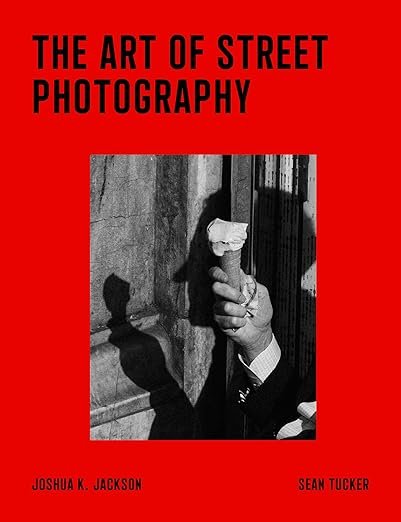
The Art of Street Photography
Joshua K. Jackson & Sean Tucker (2026)
From the publisher: “This book expands the scope of street photography from its more traditional ‘reportage’ roots to uncover your own subjective and creative visual voice. Throughout the book you will get ideas about how to use the public space as your canvas and your camera as a tool for personal expression. This approach invites you to imbue your work with personal meaning and share your perspective on the world as you seek to show the ordinary everyday in extraordinary ways.
Whether you are a seasoned street photographer or just beginning, this book will inflame your curiosity and creativity. Packed with wisdom, encouragement, and striking imagery, The Art of Street Photography will shift your photography from a merely technical exercise to something truly artistic.”
A Note on Recommendations
Whenever I recommend a book, tool, or product, I do so purely because I find it meaningful, helpful, or worth sharing. I have no financial, commercial, or affiliate relationship with the authors, publishers, or sellers. My recommendations are offered independently, without compensation or influence of any kind.
Coming Up in The Flâneur’s Journal
Next week, we’ll step into Chapter Two of the Projects series — What Your Work Is Already Trying to Say. This chapter turns your attention toward the quiet patterns already forming in your photographs: the moods you return to, the places that keep pulling you back, the gestures and tensions that appear without your permission. It’s about recognising the beginnings of a project long before you name it — learning to see the threads your work has been weaving beneath your awareness.
More is unfolding just ahead. Let your practice move with curiosity, stay open to the subtle signals in your own images, and allow the next chapter to meet you with whatever your eye is ready to notice.