Photograph Without a Plan: Live in the Present - Part 2 of 2
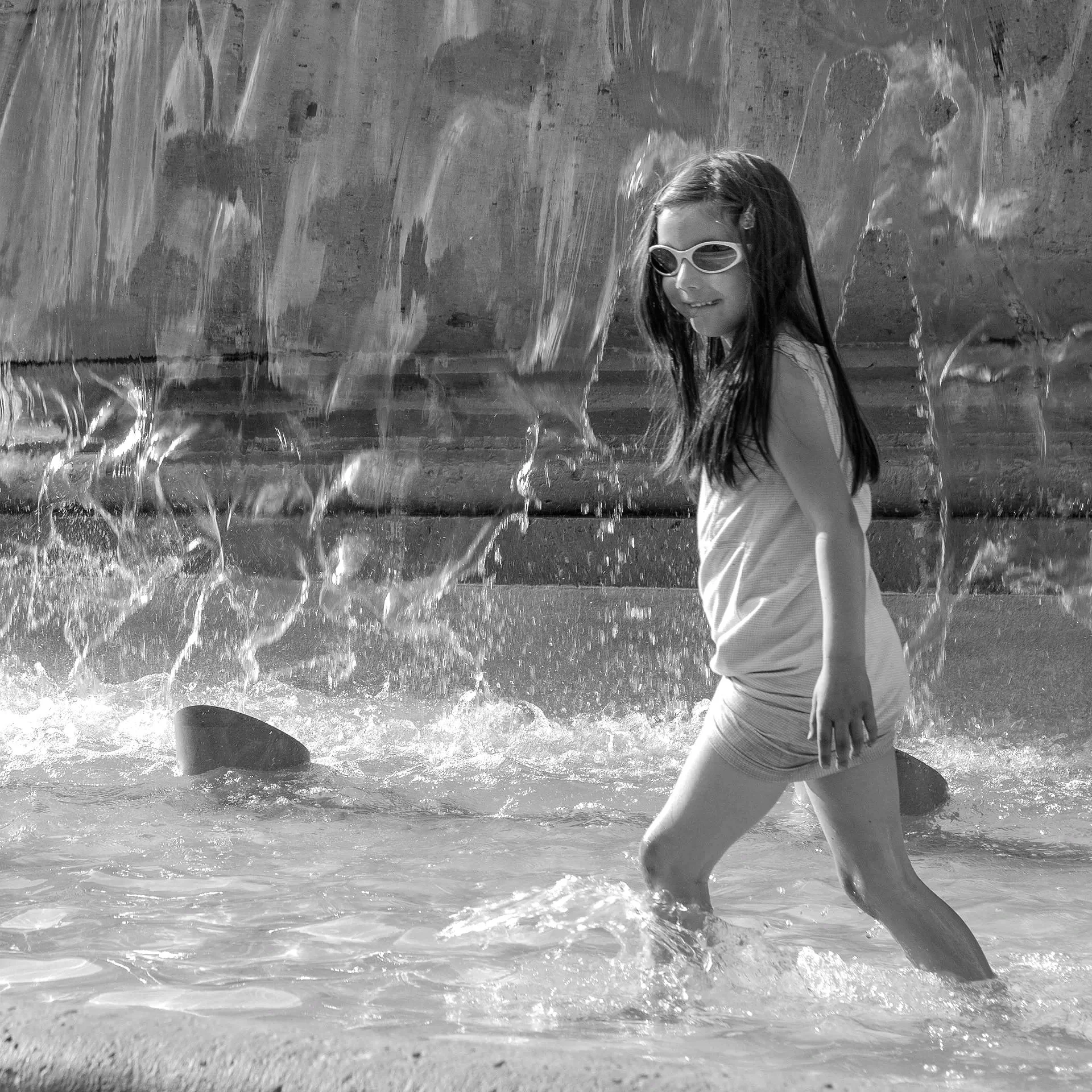
The Small Business of Being a Child
She moves through the fountain as if the city has paused for her alone—bare feet skimming shallow water, sunglasses catching the late glare, a small body utterly surrendered to the immediate pleasure of coolness. The heat is a presence you can feel in the sentence of the image; the water answers it with bright arcs and a thousand tiny collisions. In that bright, wet instant she is wholly in the present: laughing without memory, stepping without plan, a human punctuation mark of joy in the middle of urban motion.
Photographed, candid, in Frankfurt with her mother’s permission on a day when temperatures climbed well above 100°F. Children live in the present, their attention braided to the moment and often blind to the wider scene.
Where Presence Meets the Present
Presence is a rare thing in a world that constantly pulls us forward—toward the next task, the next notification, the next obligation. But the street has its own tempo, and if you let it, it will teach you how to return to the moment you’re actually living in. Street photography, at its heart, is a practice of presence. It asks you to stand still inside the flow of life and pay attention to what most people rush past.
I didn’t learn this from books or workshops. I learned it as a young man, walking—slowly, repeatedly, sometimes aimlessly, a natural flâneur without even knowing the word—through cities that revealed themselves one fleeting moment at a time. I was always in awe of the people and scenes I witnessed. I didn’t even carry a camera in those days, yet I could walk for hours, exploring, searching, breathing it all in. I learned that patience—sitting still, absorbing the environment, the wind, the sounds, the smells—pulled me into the present. It sharpened my focus, helped me see more clearly, and taught me to notice the subtle things most people overlook.
The Street Rewards the Unhurried
The first lesson the street taught me, or perhaps reminded me, is simple: slow down. When you move too quickly, you see only the broad strokes of a place. But when you ease your pace, the world begins to open. A gesture. A shadow. A reflection in a window you would have missed had you been walking with purpose instead of curiosity.
Presence begins with unhurried steps.
Moments Don’t Announce Themselves
The most meaningful scenes rarely arrive with fanfare. They slip into view quietly—a child’s hand reaching for a parent, a stranger lost in thought, a sudden burst of laughter that vanishes as quickly as it came. These moments don’t wait for you to be ready. They don’t repeat themselves.
The street taught me that presence is the only way to meet them. And presence on the streets works hand in hand with intuition.
Listening With Your Eyes
Being present isn’t just about seeing; it’s about listening with your eyes. The street hums with stories: the rhythm of footsteps, the murmur of conversations, the choreography of people weaving past one another. When you’re fully present, you begin to sense the moment before it happens—the subtle shift in energy that tells you something is about to unfold.
Attention lets you see a moment; intuition lets you anticipate it. Noticing a young child approaching a large puddle is attention. Knowing the child might leap into it—that’s intuition. Be ready.
Letting Go of Control
Presence also means surrendering control. You can’t script the street. You can’t predict who will walk into your frame or what the light will do. The more you try to force a moment, the more it slips away.
The street taught me to let go—to trust that what I need will appear if I stay open to it. Serendipity becomes a collaborator, not a coincidence.
The Gift of the Candid
Candid moments are the purest expression of presence because they arise in the unguarded spaces of ordinary life—those instants when people forget the world is watching and simply return to being themselves. In those brief openings, life stops performing and starts revealing. A hand lifted in mid‑gesture, a glance exchanged between strangers, a posture that betrays a private thought—these are truths that no staged image can imitate, because they are born of unselfconscious living.
The street taught me that presence isn’t a passive state but a form of active receptivity. It’s the quiet, alert readiness to receive whatever the world offers, without forcing it, shaping it, or anticipating it. Presence is the discipline of standing open to the moment, trusting that something meaningful will emerge if you’re willing to meet the world exactly as it is.
Returning to Yourself
Perhaps the most unexpected lesson is this: being present on the street teaches you how to be present in your own life. The same attentiveness you bring to a fleeting moment becomes the attentiveness you bring to a conversation, a meal, a walk, a breath.
The street becomes a mirror, reflecting not just the world, but your own capacity to inhabit it fully.
A Practice, Not a Destination
Presence isn’t something you master. It’s something you practice—every time you step outside with your camera, every time you choose to notice instead of rush, every time you let the world surprise you.
The streets have taught me that being present is less about discipline and more about surrender. It’s about showing up with open eyes, open hands, and an open heart.
And in that openness, the world reveals itself—one fleeting, beautiful moment at a time.
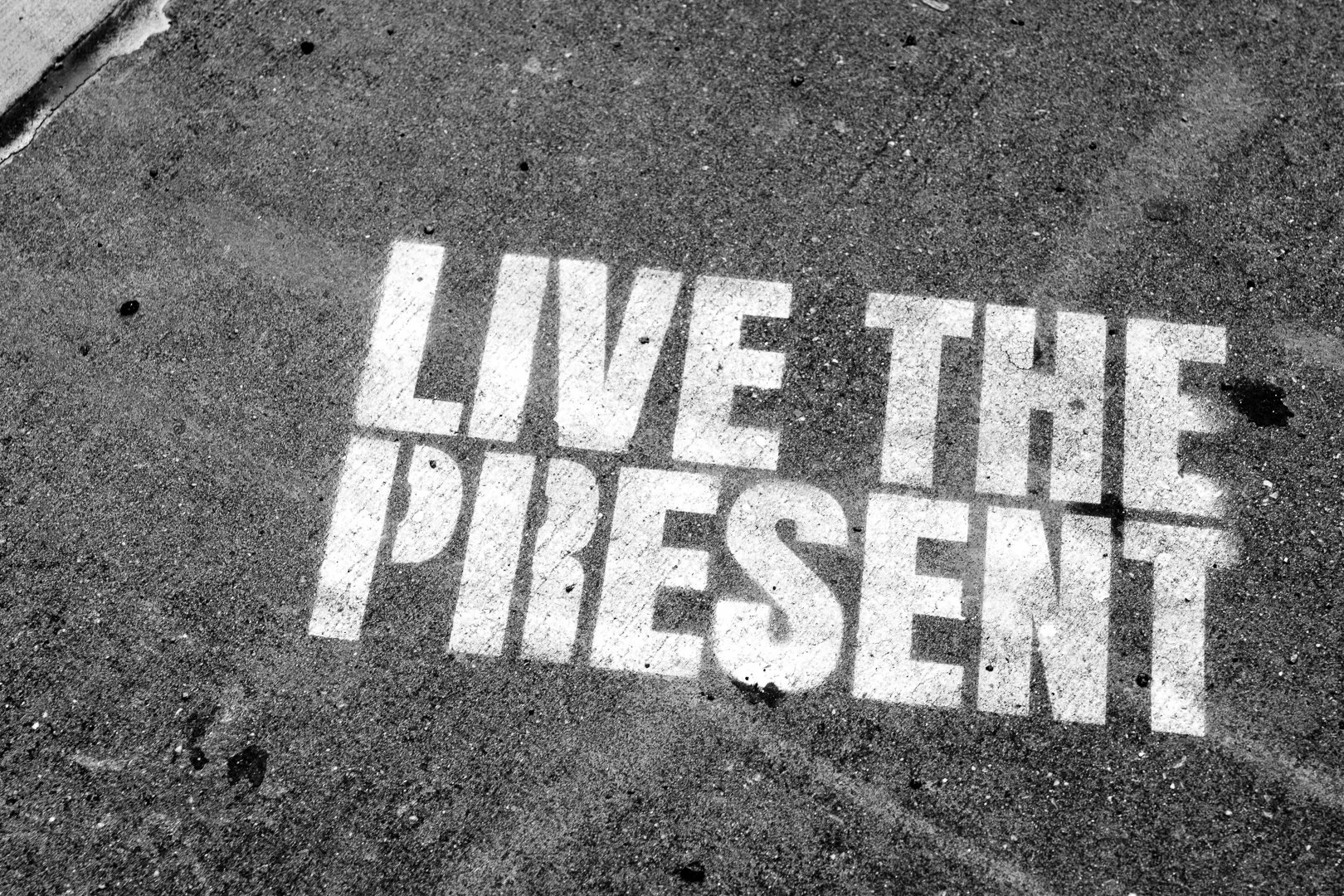
Presence vs. Living in the Present
Presence and living in the present are often treated as the same thing, but they’re actually distinct. Presence is the state of being fully engaged in a particular place or situation—aware, attentive, and consciously involved in what’s unfolding around you. It’s about showing up with your senses awake.
Living in the present, on the other hand, is an intentional practice. It means focusing your awareness on the current moment without judgment or distraction—letting go of the pull of past regrets and future anxieties. It’s the act of experiencing life directly as it unfolds, anchoring yourself in the now rather than drifting into memory or anticipation.
Living in the present enriches our daily experience. It frees us from the weight of what was and the pressure of what might be, allowing us to inhabit each moment with clarity and openness.
So while presence and living in the present are closely related, they are not identical. Presence is the conscious act of being here; living in the present is the mindful practice of staying here.
As a street photographer, you want both—presence to see the moment, and living in the present to truly feel it.
Presence
Presence is the quiet art of being here—
not ahead of yourself,
not behind your thoughts,
but balanced on the thin, bright edge of now.
It is the breath before the shutter,
the stillness that gathers the world
without reaching for it.
It is the moment choosing you
because you were willing
to stop,
to listen,
to belong to this instant
and no other.
by Jean‑François Cléroux