Photograph Without a Plan: Embracing Serendipity on the Streets - Part 1 of 2
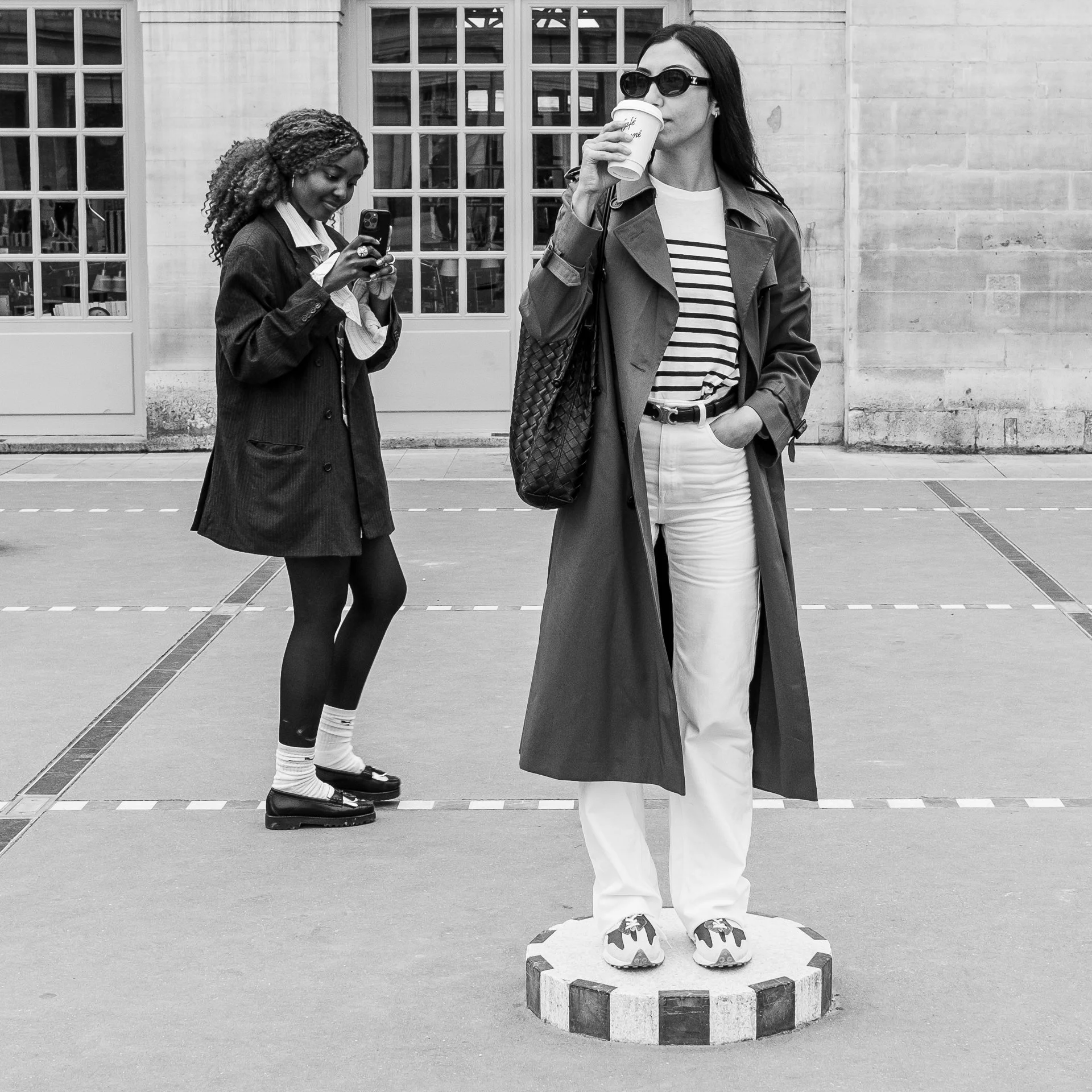
Pedestal Pause
A small stage in the city: a figure perched on a striped pedestal, trench coat falling like a curtain, cup raised in a private ritual; nearby, another body bends toward a glowing phone, smiling at a moment only she can see. The plaza’s geometry—windows, dashed lines, the ordered pavement—frames their quiet dissonance: one posed in stillness, one absorbed in a tiny screen of light. In black and white the scene becomes a short poem of contrasts—stance and motion, public architecture and private attention—each element a line that insists on being read slowly.
There’s a particular kind of freedom that comes from stepping into the street with no agenda, no shot list, no expectations. Just you, the city, your camera, and whatever unfolds in front of you. Some of my most meaningful photographs were born this way—out of moments I never could have predicted, let alone planned.
Street photography thrives on serendipity. It asks us to loosen our grip on control, to trust the rhythm of the city, and to let the world reveal itself in its own time. When you photograph without a plan, you’re not wandering aimlessly. You’re opening yourself to possibility.
Serendipity
Serendipity is inseparable from the candid heart of street photography. The most honest images often arrive unannounced—those fleeting, unguarded gestures that no amount of planning could ever script. When you embrace serendipity, you also embrace the candid: the glance exchanged between strangers, the quiet tension in a doorway, the laughter that erupts and disappears before you can fully register it. These moments are raw, unpolished, and beautifully human. They remind us that the street reveals itself on its own terms, and that the truest photographs are often the ones we never saw coming.
Let the City Lead You
When you walk without a destination, the city becomes your guide. A slant of light across a brick wall. A stranger’s gesture. A reflection in a puddle. A fleeting expression that lasts less than a breath. These are the gifts that only appear when you’re not rushing toward something else.
The practice is simple: slow your pace. Notice what’s around you. Let curiosity guide your steps instead of intention. The street will always offer more than you expect. As you wander an area for the first time, pay attention to the architecture, the play of light and shadow, the quiet corners, and the crowded ones—knowing that time of day transforms them all. Keep notes with street names or addresses for those backlit silhouettes, perfect backdrops or the rush‑hour avenues when the city surges home.
Trust Your Instincts
Photographing without a plan means listening to the quiet tug inside you—the instinct that says stop here, wait a moment, turn left instead of right. Instinct is a muscle, and the more you trust it, the stronger it becomes.
Sometimes you’ll wait, and nothing happens. Other times, everything happens at once. That unpredictability is the heartbeat of street photography.
Editing as a Second Walk
When you return home and begin editing, you’re taking a second walk through the day. This time, you’re slower, more deliberate. You notice details you missed in the moment. You discover themes, patterns, and stories that weren’t obvious while you were in motion. Again, make notes about the locations that worked but perhaps just did not get that ‘perfect’ shot, the right character, or that ‘Decisive Moment’.
Editing without a rigid plan lets the images speak for themselves. Give them room to tell you what the day was really about. Each frame holds a story you may not have fully grasped in the moment you pressed the shutter. Taking the time to look closely—at details you missed, gestures you overlooked, light you barely noticed—can deepen that story. It evolves. Your edits and crops can help shape its direction, guiding the viewer toward the narrative you want to share. But remember: no image ever tells the whole truth. Viewers will always bring their own stories to what they see. That, in many ways, is the beauty—and the perfection—of street photography.
Let Poetry Shape Your Seeing
For me, poetry and photography are inseparable. A poem teaches you to pay attention to the small things—the way light falls, the rhythm of footsteps, the quiet drama of ordinary life. When you photograph without a plan, you’re essentially writing a poem with your camera.
A line of verse can sharpen your eye, just as a photograph can spark a poem. Both are forms of noticing. When I sit down to edit and take a second or third look at a complex image, the poetry often emerges—quietly, almost unexpectedly. Not with every photograph, of course, but certainly with the ones that hold a deeper story.
Embrace Imperfection
When you surrender control, you also surrender perfection. And that’s a good thing. The street is messy, unpredictable, and beautifully imperfect. A great street photograph often contains tension, imbalance, or a moment that almost didn’t happen.
Let the imperfections stay. They’re part of the truth. Technical imperfections are not only allowable in street photography—they’re often part of what makes the genre so compelling. A bit of blur, a tilted horizon, grain, clipped highlights, or a subject caught just at the edge of the frame can all contribute to the raw honesty of the moment. Street photography isn’t about flawless execution; it’s about presence, timing, and the emotional truth of what unfolded in front of you. The street is unpredictable, and the images that come from it carry that unpredictability in their bones. Imperfections remind us that the moment was real, unrepeatable, and alive. In many cases, they’re not flaws at all, but signatures of authenticity—the very qualities that give street photography its power and its poetry.
Why Serendipity Matters
In a world obsessed with efficiency and productivity, wandering without a plan is a small act of rebellion. It’s a way of reclaiming time, attention, and presence. It reminds us that creativity isn’t something we force—it’s something we allow.
Serendipity is generous. It gives us more than we could ever script. Serendipity has always been a generous companion on the street, offering small gifts when you least expect them. The muse, however, is far more fickle. She arrives in her own time—sometimes in a rush of clarity, sometimes in a whisper that barely reaches you, and often not at all when you try to summon her. Yet when you wander without expectation, when you loosen your grip and let the day unfold, she tends to slip quietly back into step beside you. Serendipity opens the door; the muse decides whether to walk through it. All we can do is stay attentive, stay open, and keep moving through the world, listening with open eyes and a curious heart.
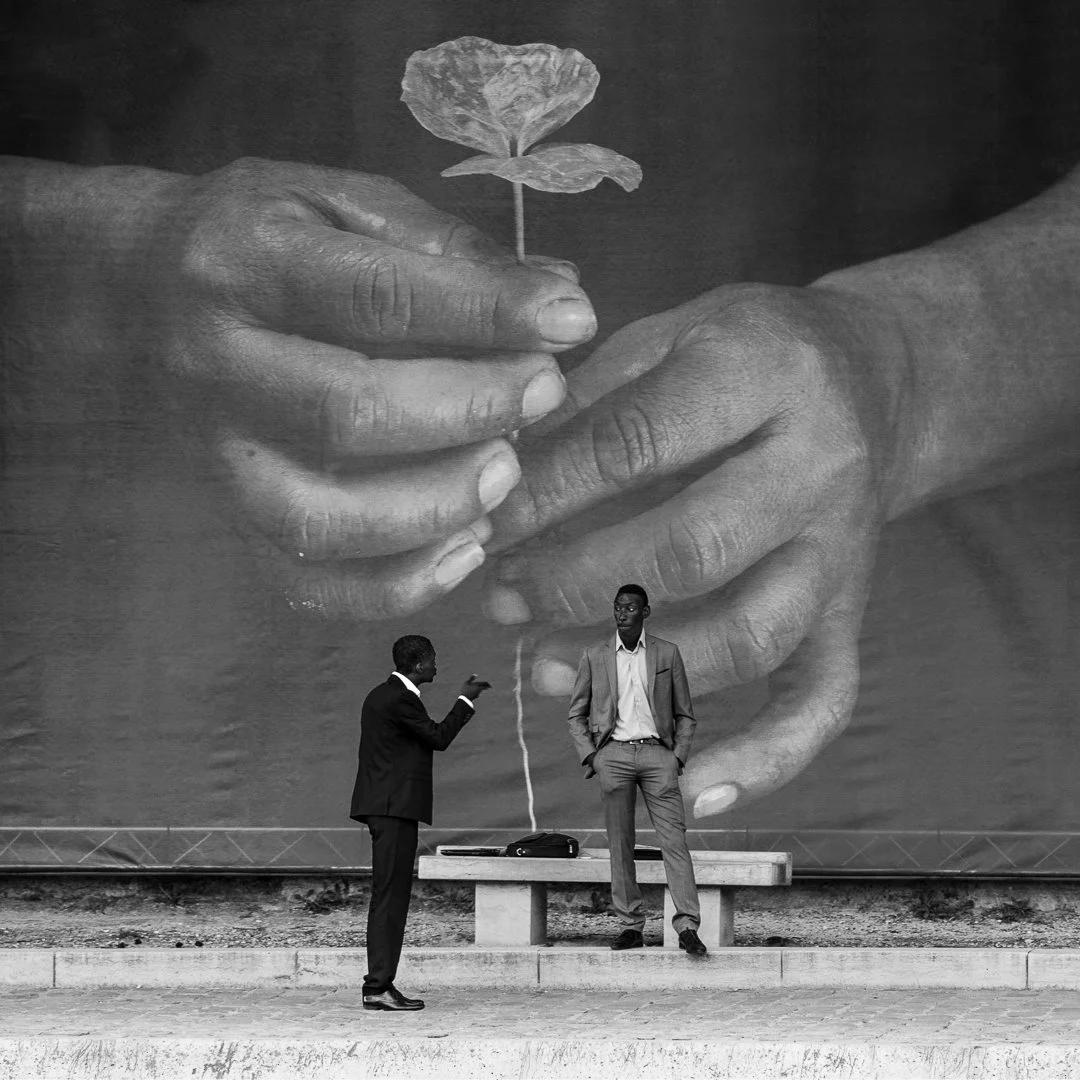
Cradle & Trigger
This image of the two men arguing along the banks of the Seine was one of those perfect serendipitous moments. I boarded the short river cruise expecting little more than a few photographs of the Eiffel Tower, but the river had other plans. The banks were alive with scenes—people sunning themselves, others reading, teenagers gathering for a drink. Then came these two men, locked in a loud argument. As I raised my camera, one of them made a hand gesture shaped like a gun, and the other’s eyes widened in response. Behind them, almost absurdly gentle in contrast, a young hand held up a small plant—an accidental symbol of peace against the tension of the moment. These varied, unlooked‑for collisions of gesture and meaning are what help make street photography so endlessly surprising.
Join us in Lessons Within on March 11, 2026 for a detailed compositional and creative reading of this image.
Walk With Me
As I continue rebuilding my creative life—balancing photography, poetry, writing, research, and the ongoing work of shaping three books and two websites—I’m reminded again and again that the best moments come when I let go of the need to control the outcome.
If you’d like to join me for a two‑hour stroll of flânerie and photography—starting with or followed by coffee and a few treats—let me know. I may be able to make it happen.
And if you see me out there—camera in hand, wandering without a plan—feel free to say hello.
See you on the streets.